
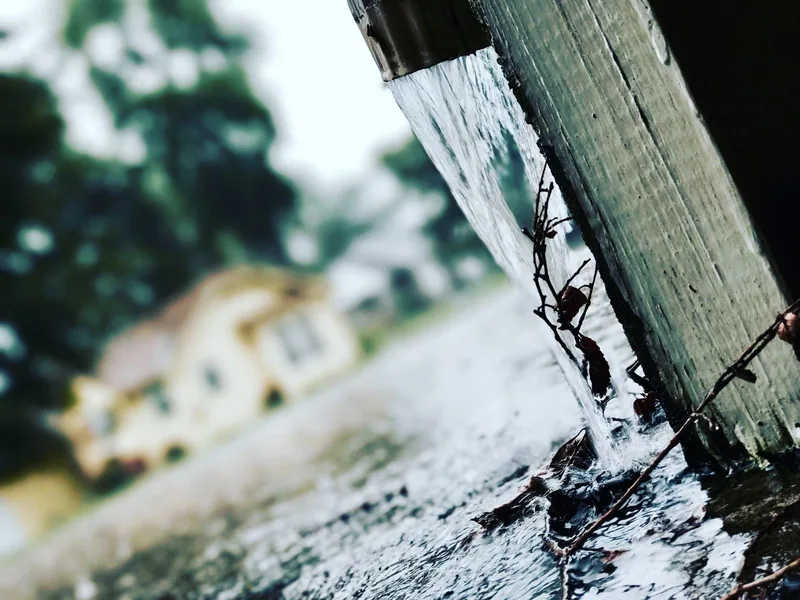
Chicago-area homeowners can sketch where roof and yard runoff enters, pools and leaves the property before changing a planting bed, path or patio. Start with a rough plan of the house and yard, then add what you see after a storm from a sheltered spot or once conditions are safe. A puddle marks a low point. The water trail leading to it helps explain where to start. Illinois Extension on rainfall management
Follow the water from source to outlet
| Mark on the sketch | What to look for |
|---|---|
| Roof and downspouts | Mark where each visible outlet ends. If a pipe disappears underground, label that route unknown. |
| Hard surfaces and slopes | Draw arrows where water leaves a drive, patio or path. Look for deposited grit, flattened mulch or a worn channel. |
| Low points and receiving areas | Outline puddles and mark the time after rain. Check the same places on the next dry day to see where water persists. |
| Overflow | Trace where water goes after the low area fills. Mark steps, doors, window wells, property edges and sidewalks along the route. |
Siting and overflow for rain gardens and bioswales
Pick the next check
If a downspout and a patio edge feed the same wet spot, document both before resizing a bed. If you have room for water to soak in, check soil infiltration and identify a safe overflow route before selecting a rain garden. If the sketch shows ponding against the house, flow onto neighboring property or a buried outlet you cannot trace, have the drainage route assessed before digging or redirecting it. Metropolitan Water Reclamation District green infrastructure, Illinois Extension rain gardens