
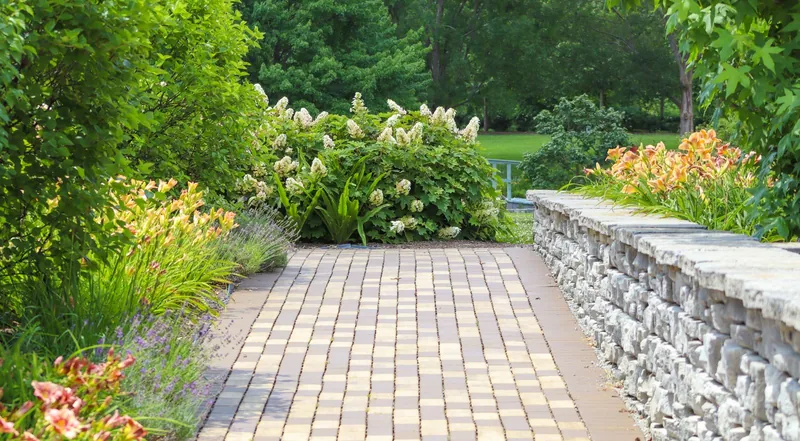
Chicago-area homeowners can choose a garden path surface by checking how they use the whole route, how water leaves it and where they will put snow. Compare the surface at the tightest turn and at each threshold. A firm, even sample in the middle tells you little about a raised edge that catches a wheel near the gate. U.S. Access Board guidance on floor and ground surfaces
| Surface to test | Where to inspect it | Winter maintenance question |
|---|---|---|
| Small-joint paving units | Look for raised edges between units and where the path meets the steps, drive or gate. | Can you move a shovel over the joints without catching its edge? |
| Set stone | Check whether individual stones rock and how the gaps feel underfoot. | Can you locate and clear the edges when the ground is covered? |
| Contained gravel | Walk it and, if relevant, try the wheelbarrow or mobility aid that will use the route. Compare loose areas and places where the material shifts. | Where will gravel go when you clear snow or when water crosses the path? |
University of Missouri Extension residential landscape materials, University of Missouri Extension brick walk construction
Compare the route in wet weather
Walk the proposed route after rain. Mark the wettest portion, especially where the garage or a fence shades it, and find where water can leave without crossing a doorway. If the path needs to accommodate wheels or walkers, use firmness, stability and slip resistance as design checks for the entire route, including the transitions. Confirm separately which accessibility rules apply to your property. Address a recurring puddle before you commit to the surface. Access Board surface guidance, Illinois Extension on runoff
Continue with when to choose conventional pavers or a permeable patio assembly.