
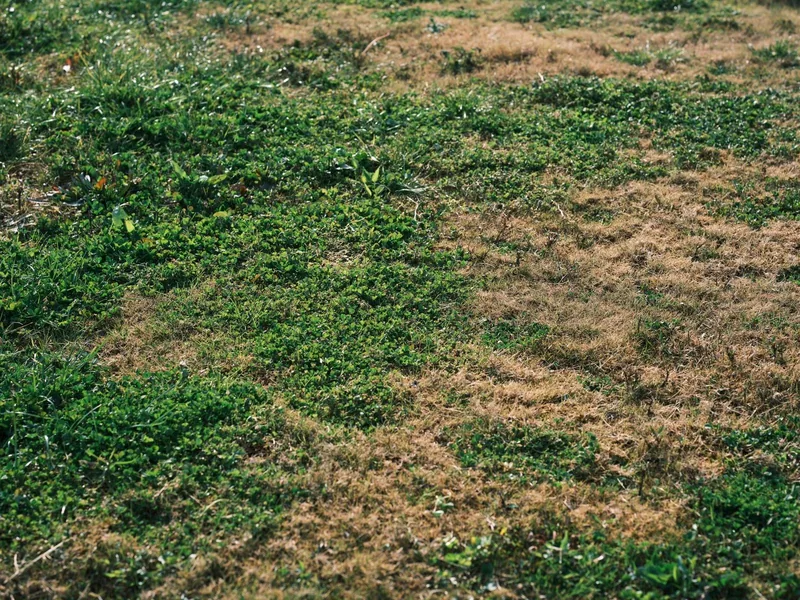
Chicago-area homeowners with a brown lawn patch can lift a small section at its edge to see whether white grubs are feeding in the root zone. A patch that pulls back easily is worth inspecting, especially in late summer. Compare the roots and soil with adjacent healthy turf to help distinguish root feeding from drought, poor soil or turf disease. Illinois Extension grub guide
Check the edge rather than the center
At the border between green and damaged turf, peel back about a square foot of sod and look at the roots and upper soil. Typical white grubs are pale and curl into a C. Count what you find, replace the sod and firm it back against the ground. Use another edge sample if the problem covers several different parts of the lawn. Illinois Extension sampling guidance
Use the count with the turf condition
About 12 grubs in a square foot can damage Illinois lawns enough to warrant control. Healthy grass may tolerate lower counts, while hot and dry conditions can make root loss more apparent. Skunk or raccoon digging can occur at low counts. If your checks find few or no grubs, investigate moisture, compaction or disease before choosing a grub treatment. Illinois Extension grub counts and damage, Illinois Extension turf damage notes