
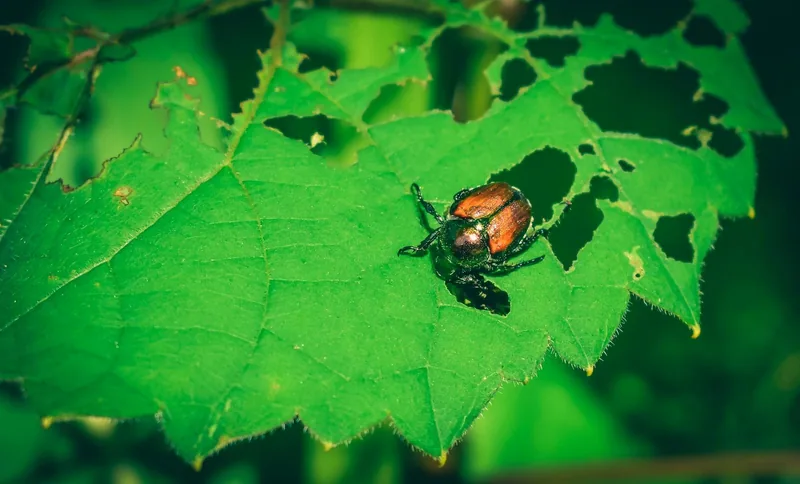
Chicago-area gardeners who find lace-like damage on roses, grapes or other plants can check for Japanese beetles before choosing how to respond. Adults eat tissue between the main veins, leaving a leaf skeleton. That pattern is a reason to look for the beetle. Its presence on the damaged plant provides stronger evidence than the leaf pattern alone. Illinois Extension Japanese beetle guide
Look where the feeding starts
Start with the upper leaves and check particularly where damage is fresh. Look for a metallic green head and body, copper-colored wing covers and small white tufts along the rear sides. In Illinois, adults begin to appear around late June and are commonly present in July and August. If you find no beetles, record where the newest damage is and check again before deciding what caused it. Illinois Extension identification and life cycle
Start with the plants you can monitor
For a few accessible plants, knock visible adults into soapy water. Cooler morning or evening conditions can make hand removal easier. Skip the lure trap beside the planting you want to protect. A trap can draw additional beetles into the area, including insects it fails to catch. Keep observing the new leaves and flowers to see whether feeding continues. University of Minnesota Extension household management