
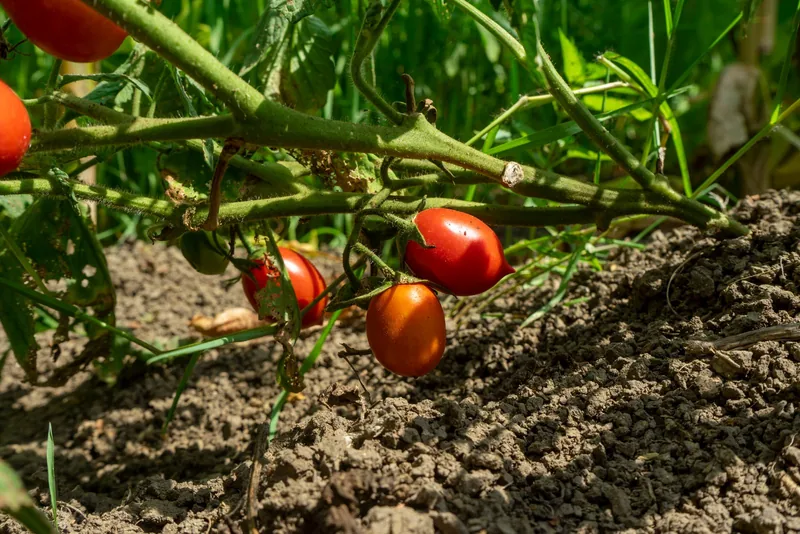
Chicago-area gardeners can transplant tomatoes outdoors once the soil has warmed and your location’s freeze risk has passed. Northern Illinois median last-freeze dates are a planning guide. On planting day, check the overnight outlook for your location and the soil temperature in your bed. Illinois Extension tomato guide, Illinois planting calendar, NWS Chicago point forecast.
- Acclimate seedlings. Start with a few sheltered hours outdoors and gradually extend their time in the sun over a week or two. Bring them in if nights approach freezing. University of Minnesota Extension tomato guide.
- Choose the bed and support together. For an in-ground planting with a history of disease, rotate away from tomatoes and related crops when space allows. Illinois Extension’s in-row spacing starts at 12 inches for dwarfs, 15–24 for staked tomatoes and 24–36 for trellised plants. Allow more room for especially large varieties. Set supports when planting. Illinois Extension spacing guidance, University of Minnesota Extension transplanting guidance.
- Keep moisture steady near the roots. Cover an exposed peat pot rim with soil so it cannot draw water from the root ball. Once planted, mulch the bed and direct irrigation toward the soil. This helps limit soil splash onto leaves and reduces swings in moisture as fruit develops. University of Minnesota Extension transplanting guidance, Illinois Extension care and common problems, University of Minnesota Extension leaf spot guidance.
If spots appear, check where they start. On lower leaves, look for target rings typical of early blight or smaller spots with pale centers typical of Septoria. Early symptoms can overlap. On the fruit, a dry, leathery spot at the flower end points toward blossom-end rot. Steady watering can protect later fruit. A soil test can establish whether a nutrient amendment is needed. University of Minnesota Extension tomato diagnosis, University of Minnesota Extension tomato disorders, Illinois Extension soil testing.