
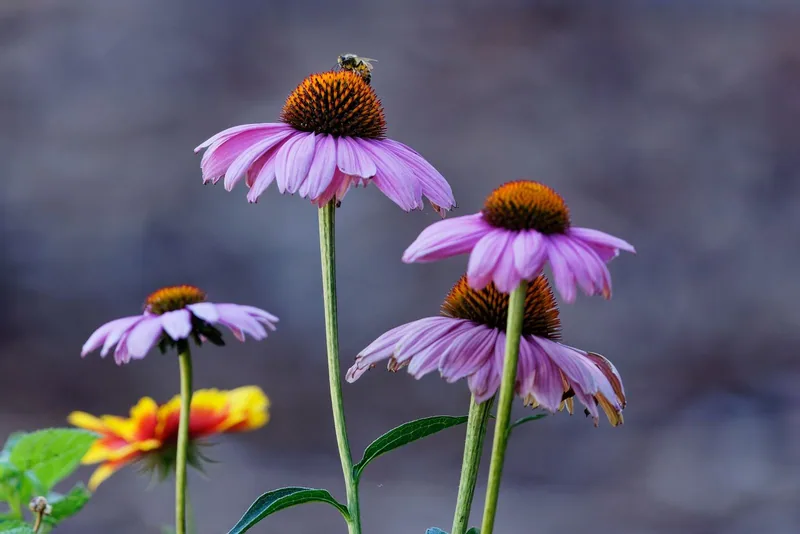
Northern Illinois gardeners can keep flowers available across more of the growing season by matching each plant to the bed’s light and moisture, then combining plants with overlapping bloom windows. Start with an early, middle and late candidate and check which of them fit your site. Illinois DNR pollinator plant lists, Northern Illinois butterfly-garden list
| Northern Illinois candidate | Approximate bloom window in the regional list | Site or layout consideration |
|---|---|---|
| Golden Alexanders (Zizia aurea) | May–June | Tolerates some shade. It can reach roughly 3 feet, so leave room behind lower plants. |
| Pale purple coneflower (Echinacea pallida) | June–July | Use it to bridge early and summer flowers if the bed fits the species. The regional list gives a height of 2–3 feet. |
| Purple prairie clover (Dalea purpurea) | July–September | The Illinois DNR list places it in the low-water group. |
| Smooth blue aster (Symphyotrichum laeve) | August–October | Illinois DNR lists it for a range of soils. Plan around its roughly 4-foot height. |
Start by marking the sunny, shaded, well-drained and persistently moist parts of the bed. Pick species for each of those conditions before using the calendar to fill a bloom gap. For example, choose butterfly weed for a sunny, drained area and consider swamp milkweed where the soil holds more moisture. Both are milkweeds that support monarch caterpillars. Keep other nectar plants in the plan so flowering coverage extends beyond the milkweeds’ season. Illinois Extension milkweed guide, Illinois DNR pollinator plant list
Write down the first and last flowers you actually see in each part of the bed. A local bloom calendar is a starting point. Use your observations to choose whether the next addition needs to fill an early or late gap, and whether it needs to tolerate more sun, shade or moisture.