
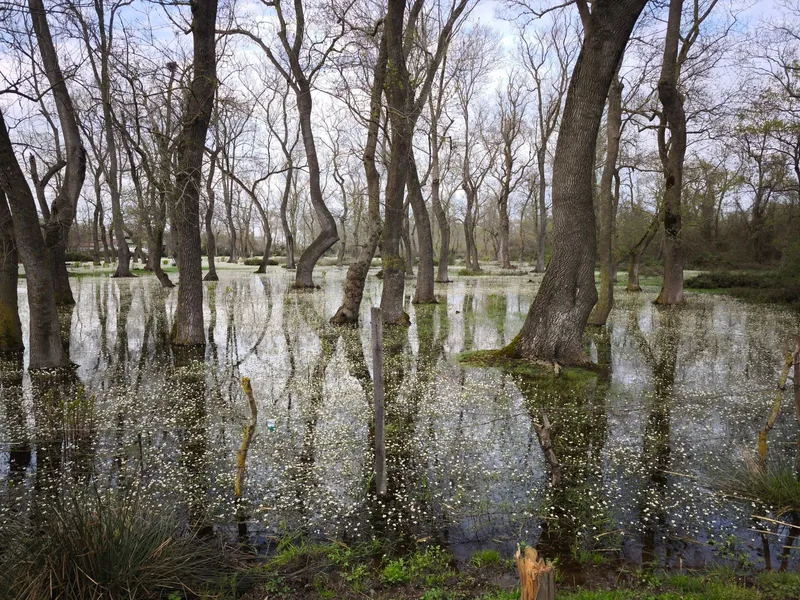
Chicago-area homeowners can consider swamp white oak for a sunny site with moist soil and occasional flooding. Watch how long water stands at the proposed planting spot before choosing it. Swamp white oak tolerates poorer drainage than many oaks, and its natural range includes seasonally wet ground. The Forest Service describes it as absent from permanently flooded ground. Morton Arboretum species profile, USDA Forest Service species account
Observe the spot after more than one storm
Mark the edge of the puddle after a rain and check the same spot again as the yard dries. Write down where the water came from and where it goes. A shallow low spot that drains between storms presents a different planting decision from ground that stays saturated through dry weather. If the root zone may stay wet, check drainage before buying the tree or look for a nearby spot with better drainage. Illinois Extension yard drainage guide, USDA Forest Service species account
Check sun, soil and room for the crown
Allow space for a tree that can reach about 50–60 feet tall and wide. Look for full sun and check soil pH before using it on a site with alkaline soil. Swamp white oak can develop yellow foliage from chlorosis at high pH. A promising spot has sun, room for the mature crown and moisture that the site can drain. If the low spot fails those checks, map a second planting location before choosing a species. Morton Arboretum species profile