
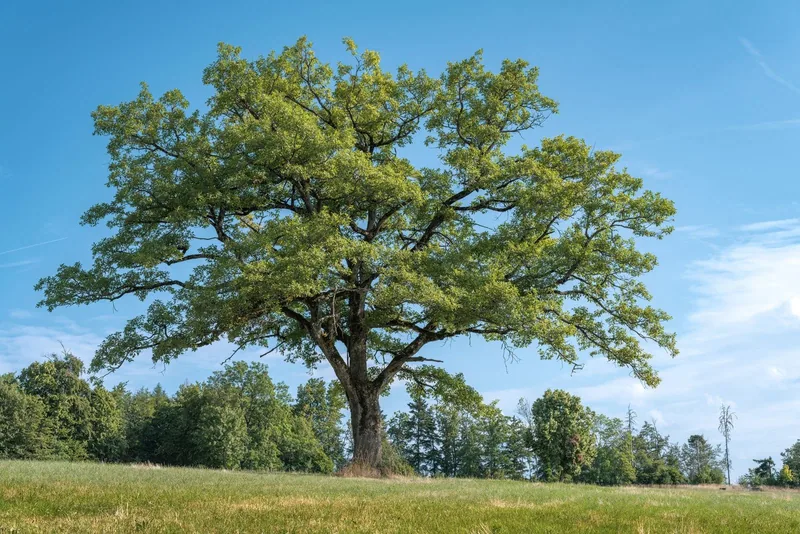
Chicago-area homeowners choosing a large shade tree can compare bur oak and swamp white oak by the amount of room available and what happens to water in the soil. Bur oak has the broader typical crown and tolerates dry periods after establishment. Swamp white oak fits moister sites that drain and can tolerate occasional flooding. Both are native to the Chicago region and prefer full sun. Morton Arboretum bur oak profile, Morton Arboretum swamp white oak profile
| Site check | Bur oak | Swamp white oak |
|---|---|---|
| Typical mature height and width | 70–80 feet | 50–60 feet |
| Soil to look for | Well-drained ground | Moist, acidic soil |
| Condition that can tip the decision | Dry spells after the tree is established | Occasional flooding where the site can drain |
Bur oak growing conditions, Swamp white oak growing conditions
Make the choice on the ground
Start at the spot where the trunk would go. Sketch how far the typical crown could reach and mark houses, paved areas and overhead lines. If neither mature width fits, shortlist a smaller species. If both fit, check where rain pools and how quickly the soil drains. For a candidate swamp white oak site, add soil pH to the check. For bur oak, look at whether future construction could disturb a large part of the rooting area. Morton Arboretum tree selection guidance, Bur oak profile and care, Swamp white oak profile and care